Is the Dominican Republic Actually Safe for Your Investment?
That’s the first question every Canadian asks me before we discuss oceanfront condos, rental yields, or CONFOTUR tax incentives. And it’s the right question to ask.
After helping dozens of Canadians invest in the Dominican Republic—and having invested there myself—I’ve learned that the investors who succeed aren’t the ones chasing the highest returns. They’re the ones who understand the risks, prepare for the challenges, and structure their investments to withstand market volatility.
The Dominican Republic offers compelling opportunities for Canadian real estate investors: 6-12% net rental yields, significant tax incentives, growing tourism infrastructure, and portfolio diversification outside of Canada’s overheated markets. But these opportunities come with complexities that unprepared investors often underestimate.
This guide will show you exactly how to evaluate DR real estate opportunities with the same rigor you’d apply to any Canadian investment. You’ll learn what realistic returns look like, which locations actually deliver consistent rental income, how to structure your purchase to minimize risk, and—most importantly—how to identify whether this market aligns with your investment goals.
What you’ll find in this guide:
- Realistic return expectations with actual client examples
- The safety checklist that protects your capital
- Best locations for income-generating properties
- Pre-construction vs resale decision framework
- How to structure ownership from Canada
- Common mistakes that cost investors $50K+
- Your 2026 action plan
Let’s start with the most important question: Is this even right for you?
Is Dominican Republic Real Estate Right for You?
Before we dive into opportunities, let’s be honest about who should—and shouldn’t—invest in the Dominican Republic.
You’re a Good Candidate If:
- ✓ You have a budget of $150,000+ USD (minimum for quality, income-generating properties)
- ✓ Your investment timeline is 5+ years (short-term flipping is high-risk in emerging markets)
- ✓ You’re willing to hire local property management or buy in a hotel managed company (remote self-management rarely works)
If you’re unsure where you fit,
book a 15-minute investment fit consultation →
What Returns Can You Realistically Expect?
Here’s what you can expect based on property type and market conditions as of early 2026:
| Property Type |
Gross Rental Yield |
Net ROI (After All Costs) |
Capital Appreciation |
| Beachfront Condo |
8.5% – 12% |
6% – 8% |
9% – 13% annually |
| Golf Course Villa |
7% – 10% |
5% – 7% |
8% – 11% annually |
| City Center Apartment |
7.5% – 11% |
5.5% – 8.5% |
6% – 10% annually |
Data Sources (2025-2026):
Global Property Guide Q4 2025 Report; Banco Central de la República Dominicana (Construction Sector Outlook 2026); TheLatinvestor Real Estate Intelligence.
Note on Net ROI: Figures account for property management (25-35%), HOA, and insurance. Properties with CONFOTUR tax exemptions typically earn an additional 1.5%–2% in effective net return due to 15-year property tax holidays.
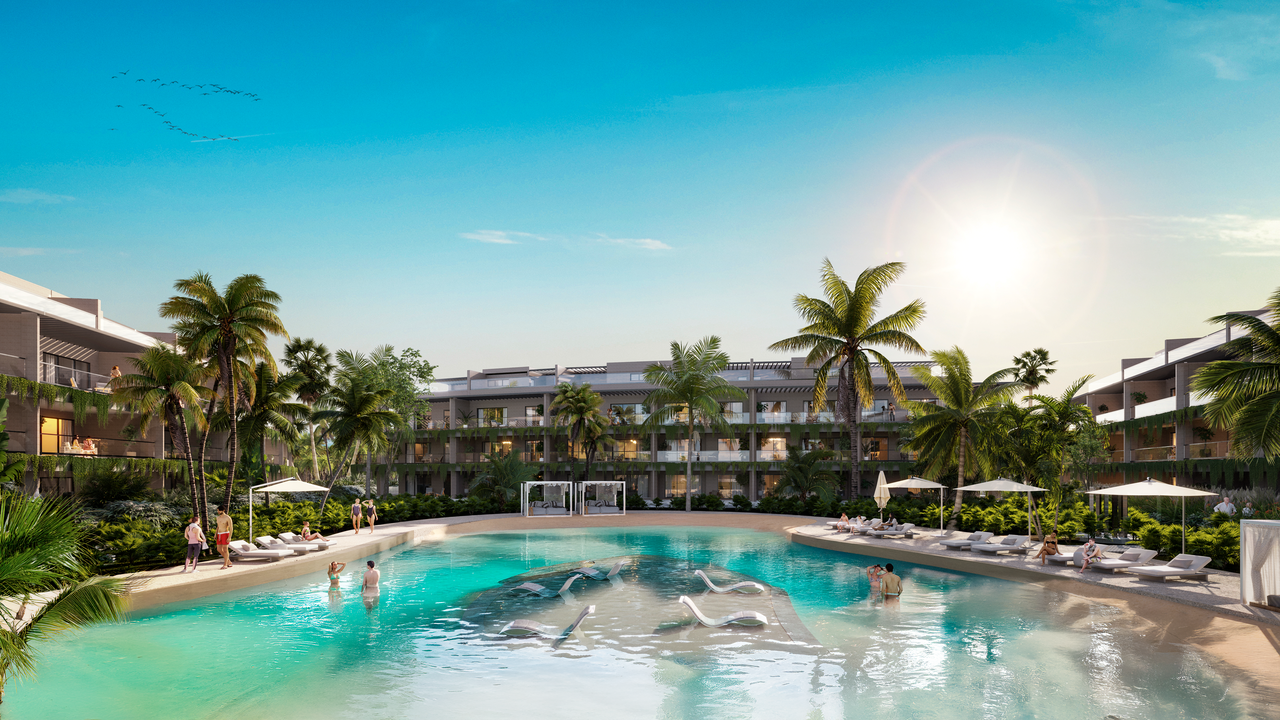
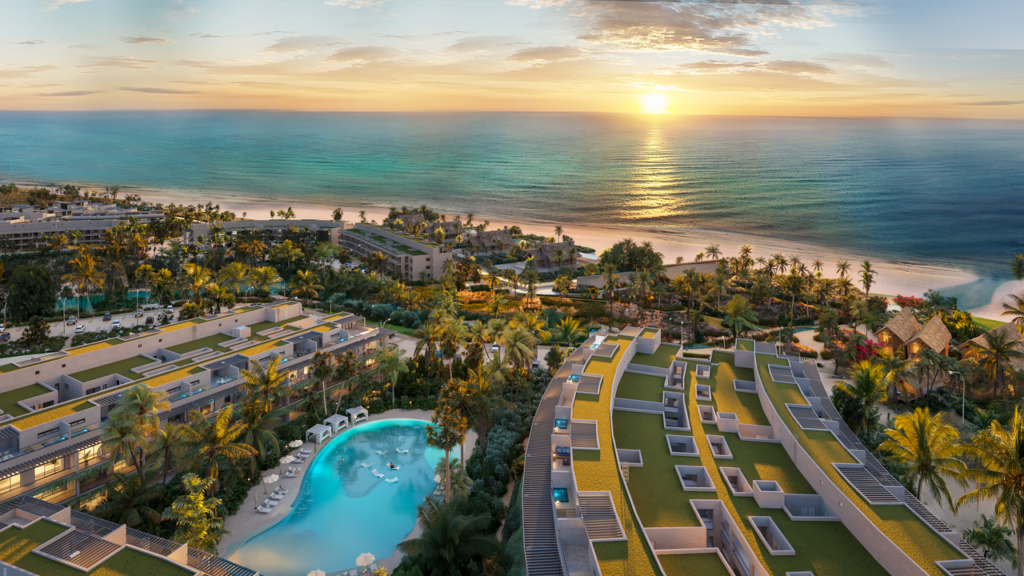
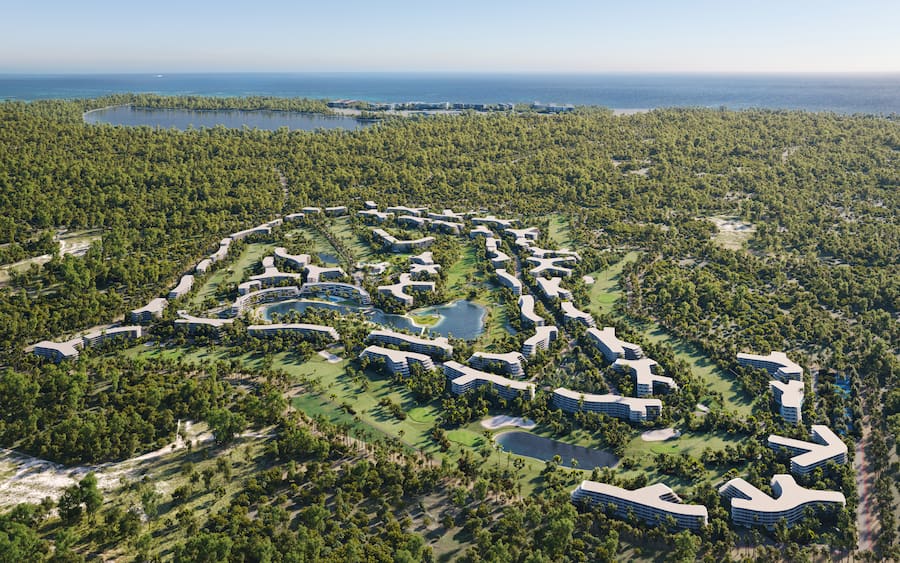
Forecasted Example: Riviera Bay (Cana Bay, Punta Cana)
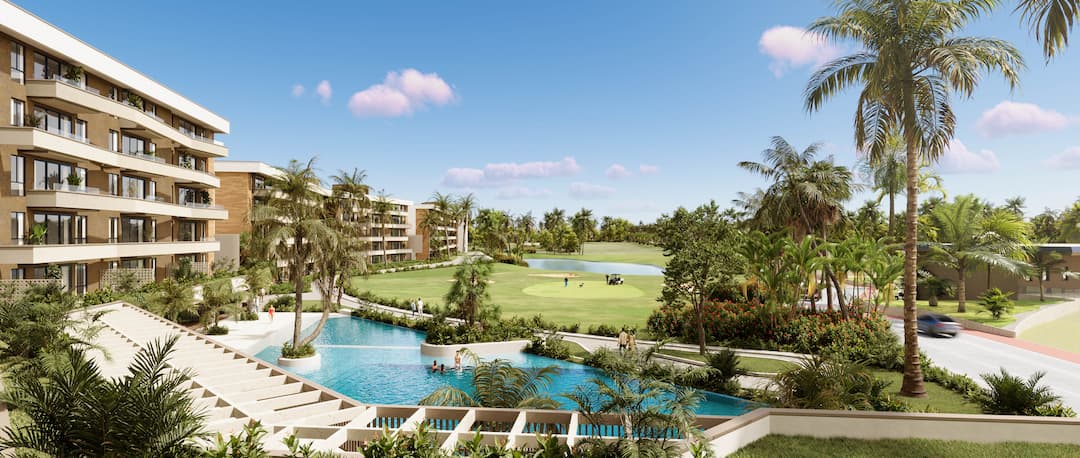
Here is a realistic 2026 projection for a 2-bedroom, 2-bathroom condo overlooking the golf course with exclusive beach club access.
Purchase Price
$305,000 USD
Initial Investment
$320,000 USD*
*Includes furniture & closing
Projected Net ROI
6.1% – 7.9%
- Projected Gross Income: $28,000 – $36,000 (Year-round demand)
- Expected Occupancy: 70% – 80% (Punta Cana average)
- Annual Expenses: $8,500 – $10,500 (Mgmt, HOA, Insurance)
- Net Annual Cash Flow: $19,500 – $25,500
- Expected Appreciation: 6% – 9% annually (Hard Rock corridor growth)
The CONFOTUR Advantage
Riviera Bay is CONFOTUR qualified, meaning you save approximately $3,000/year on property taxes (1% IPI) and avoided the $9,150 transfer tax at closing. This adds an estimated 0.9% – 1.2% to your annual net returns.
Reality Check
Riviera Bay’s value is driven by its proximity to the Hard Rock Hotel & Casino and the Cana Bay Beach Club. While occupancy is generally high, your specific ROI will depend on the quality of your property manager and the “interior design” appeal of your unit for high-end Airbnb travelers.
How This Compares to Canadian Alternatives
For context, here is how similar capital would perform in other common markets as of early 2026:
Toronto Condo Rental
2-3% net ROI (after all costs) + 6.27% appreciation = 8-9% total return
Canadian REITs
4-6% distribution yield + 2-4% growth = 6-10% total return
Dominican Republic (Hotel-Managed, CONFOTUR)
6-8% net ROI + 4-7% appreciation = 10-15% total return
The DR offers competitive total return potential with geographic diversification benefits, though it comes with higher management complexity and currency exposure. The CONFOTUR tax exemption significantly enhances net returns compared to traditional Canadian rental properties where carrying costs and taxes are steadily rising.
Breaking Down Your True Costs
Here is what most investors underestimate when budgeting for their Dominican property:
One-Time Costs
(Typically 3-5% of purchase price for resale)
- Legal fees: 1-2%
- Transfer tax: 3%
- Title insurance: 0.5-1%
- Property inspection: $500 – $1,500
- Furnishing/setup: $15,000 – $40,000
Ongoing Annual Costs
(For hotel-managed properties)
- Hotel management fee: 40-50% of gross rent
- HOA fees: $1,200 – $6,000+ annually
- Property insurance: $800 – $2,500 annually
- Maintenance reserve: Often included in fees
- Utilities: Often included in hotel-managed units
The CONFOTUR Pre-Construction Advantage
Purchasing new pre-construction properties with CONFOTUR qualification can save you significantly:
- Transfer tax exemption: Saves 3% of the purchase price upfront.
- Property tax exemption: Saves $1,500 – $2,000 annually for 15 years.
- Quality assurance: High-end building standards are a requirement to qualify for this law.
Hotel-Managed vs. Self-Managed
The properties we specialize in are professionally managed by hotel operators. While this means higher management fees (40-50% vs 20-30%), it typically results in:
- Significantly lower vacancy rates (often under 20%)
- Professional global marketing and 5-star guest services
- Truly “hands-off” ownership from Canada
Hidden Costs Canadians Often Miss:
- Wire transfer fees: $100 – $200 per transaction
- Currency conversion spread: 1-2% on each conversion
- Travel for property visits: $1,500 – $3,000 per trip (Unless you purchase preconstruction projects that offer Fly & Buy)
The “Safety First” Investment Checklist
This is the framework we use to evaluate every Dominican Republic property before recommending it to clients. Use this checklist to protect your capital.
1. Legal Title & Due Diligence (For Resale)
Must-Haves:
- ✓ Clear title verified by independent lawyer
- ✓ Title insurance from international provider
- ✓ Registered in DR land registry system
- ✓ Confirmation of no outstanding liens
- ✓ Survey confirming boundaries match title
Red Flags:
- Pressure to skip title insurance
- “Land certificate” instead of full title
- Recent title transfers (within 6 months)
Cost: $2,000 – $4,000 for proper due diligence. Worth every penny.
2. Developer/Builder Vetting (for Pre-Construction)
- Completed projects you can physically visit
- Financial statements showing adequate capitalization
- Track record delivering on promised rental programs
Reality Check: 40% of DR pre-construction projects experience significant delays. Another 15% never complete. Only work with developers who have multiple finished projects.
3. Location Fundamentals
High-Safety Locations Have:
- International airport within 90 minutes
- Presence of major hotel brands (Marriott, Hilton)
- Year-round tourist demand
- Growing visitor numbers and active expat community
Risky Locations Show:
- Dependence on a single resort/developer
- Declining arrivals over 3+ years
- Difficult access or unreliable transport
- High crime reports (Check travel advisories)
4. Property Management (If not buying a hotel-managed property) & Cash Flow
Before you buy, verify the management company has been in business 3+ years, manages 20+ properties, and carries liability insurance. Beware of lowball management quotes (below 20-30%).
5. Exit Strategy
Can you sell if needed? Look for areas with a proven resale market and international buyer demand.
6. Political & Economic Stability
For Canadian investors, the Dominican Republic offers a unique blend of high growth and institutional stability that are rare in emerging markets. Here is the 2026 outlook:
Lower-Risk Indicators
- Stable Democracy: Maintains a consistent, pro-business democratic government with strong transitions of power.
- Tourism Engine: Tourism accounts for 16-17% of GDP; the government prioritizes this sector’s safety and infrastructure.
- Strong Global Ties: Political alignment with the US and Canada, bolstered by the DR-CAFTA trade agreement.
- Currency Stability: The Dominican Peso (DOP) maintains a consistent, predictable band against the USD.
Higher-Risk Factors to Monitor
- Hurricane Exposure: Requires robust insurance and periodic maintenance for storm-proofing.
- Infrastructure Gaps: Power and water reliability is improving but varies significantly by province.
- Bureaucratic Pace: Expect slower governmental and legal processes than the typical Canadian standard.
Best Areas for Income-Generating Properties
Not all Dominican locations are created equal for Canadian investors. Here is our analysis of the top-performing market:
1. Punta Cana
Best For: Luxury vacation rentals, golf enthusiasts, and highest-quality infrastructure.
Pros
- Punta Cana International Airport access
- Highest-end tourism market in DR
- Multiple championship golf courses
- Marina, beach clubs, and high-end dining
- Strong property management ecosystem
- Consistent year-round demand
|
Cons
- Highest purchase prices ($250K – $1M+ USD)
- Oversupply in specific condo segments
- Less “authentic” Dominican experience
- Higher HOA fees ($300 – $800/month)
|
Typical Returns: 5-8% Net ROI | 4-6% Annual Appreciation
Investor Profile: High-net-worth investors prioritizing luxury and convenience over maximum returns. Strong personal-use component.
Our Take: Punta Cana offers the lowest-risk entry point for first-time DR investors due to infrastructure quality and management sophistication. You pay a premium for that security.
2. Las Terrenas
Best For: European tourist market, bohemian vibe, and consistent rental demand.
Pros
- Diverse European tourist base (French, Italian, Swiss)
- Established, multicultural expat community
- Multiple quality restaurants and boutique services
- Beautiful beaches without a “mega-resort” feel
- Strong rental demand year-round
- Lower entry price point than Cap Cana
Cons
- El Catey Airport is smaller with fewer direct flights
- Infrastructure less polished (roads, local utilities)
- Seasonal hurricane exposure
- Fewer global luxury hospitality brands
- Property management quality can be more variable
Typical Returns: 6-9% Net ROI | 5-7% Annual Appreciation
Investor Profile: Investors prioritizing rental yield over luxury amenities. Often preferred by those comfortable with a more hands-on approach or seeking a “boutique” feel.
Our Take: Las Terrenas offers better risk-adjusted returns than Cap Cana for investors who value character and higher yields, and are willing to navigate a slightly less “managed” environment.
3. Cabarete
Best For: Adventure tourism, kite surfing, and active lifestyle properties.
Pros
- World-class kite surfing and wind sports destination
- Younger, high-spending active demographic
- Lower entry price points ($120K – $300K USD)
- Strong, specific adventure tourism niche
- Quick access to Puerto Plata (POP) International Airport
- Authentic, walkable local culture
Cons
- More seasonal demand (November – April peak)
- Infrastructure challenges (local power and water reliability)
- Smaller, niche target market compared to general tourism
- Limited luxury hospitality brand presence
- Property management services are less developed
Typical Returns: 7-11% Net ROI | 3-5% Annual Appreciation
Investor Profile: Investors targeting sports enthusiasts and digital nomads, comfortable with emerging market infrastructure. Higher risk tolerance but seeking higher cash-flow potential.
Our Take: Cabarete can deliver strong cash-on-cash returns but requires more active management and a higher tolerance for infrastructure gaps. We generally do not recommend this as a first-time Dominican Republic investment for remote owners.
4. Santo Domingo (Capital City)
Best For: Long-term rentals, business travelers, and expat housing.
Pros
- Largest city with the country’s most stable, diversified economy
- Consistent year-round demand from business travelers and expats
- Less vulnerable to tourism volatility or seasonal shifts
- Lower vacancy rates due to high local housing demand
- Better established property management and corporate leasing options
- Strong appreciation potential in prime areas like Piantini and Naco
Cons
- Not a beach vacation destination (different “vibe” than coastal DR)
- Lower gross rental yields compared to short-term vacation spots
- Target market is long-term residents, requiring different management styles
- Urban challenges including significant traffic and city noise
- Less lifestyle appeal for Canadian buyers seeking a tropical escape
Typical Returns: 5-7% Net ROI | 4-6% Annual Appreciation
Investor Profile: Conservative investors prioritizing capital preservation and stability over high speculative returns. Ideal for those comfortable with urban rental markets.
Our Take: Santo Domingo is the “boring” DR market—which in investing, is often a compliment. It offers lower volatility and more predictable performance. Consider this for a balanced portfolio to hedge against tourism-heavy coastal investments.
5. Samaná Peninsula
Best For: Eco-tourism, whale watching, and the emerging ultra-luxury market.
Pros
- Unrivaled natural beauty (mountains, hidden coves, and waterfalls)
- High appreciation potential due to early-stage development
- Rapidly growing eco-tourism and branded luxury segments
- Unique seasonal draw: Humpback whale watching (Jan–Mar)
- Lower entry price points in high-growth “virgin” areas
- New high-end infrastructure and luxury projects launching in 2026
Cons
- Infrastructure (utilities and local roads) still in development phase
- Limited direct flight access compared to Punta Cana
- Smaller overall tourism market share currently
- Fewer turn-key property management options
- Higher execution risk for pre-construction projects
Typical Returns: 6-10% Net ROI (Variable) | 6-10% Appreciation Potential
Investor Profile: Sophisticated investors looking for the “next big thing” and willing to bet on an emerging market. Best for those with a 7–10 year holding period.
Our Take: Samaná offers the highest potential for capital appreciation in the country but requires patience and a high tolerance for growing pains. We generally do not recommend this as a standalone investment unless you already have exposure in more established DR markets.
Location Decision Framework
To simplify your search, choose your target area based on your primary investment priority:
-
Risk Tolerance:
Cap Cana (Lowest) → Las Terrenas (Medium) → Cabarete/Samaná (Higher)
-
Personal Use Plans:
Cap Cana or Las Terrenas (Best for families and lifestyle)
-
Maximum Returns:
Las Terrenas or Cabarete (Highest rental yields)
-
Lowest Hassle:
Cap Cana (Established infrastructure and management)
-
Appreciation Potential:
Samaná or emerging Cap Cana expansion zones
Pre-Construction with CONFOTUR: Our Recommended Strategy
At Connect.ca Realty, we specialize in hand-picking pre-construction properties that qualify for CONFOTUR (Law 158-01) tax benefits. For most Canadian investors, this is the most efficient way to enter the market while maximizing net returns from day one.Here’s why this strategy makes sense for most Canadian investors:
Why We Focus on Pre-Construction with CONFOTUR
The CONFOTUR (Law 158-01) program is a game-changer for Canadian investors. By choosing properties with this designation, you access a suite of financial advantages that significantly improve your net ROI:
-
✓
15-Year Property Tax Exemption: Saves you $1,500 – $2,000 annually by waiving the 1% IPI tax.
-
✓
Transfer Tax Exemption: Save 3% of the purchase price instantly at the closing table.
-
✓
Turnkey Delivery: Many projects include high-end furniture packages, saving you $15,000 – $40,000 in setup costs and logistics.
-
✓
Hotel Management Infrastructure: Access professional operations and global marketing from day one for a truly passive investment.
-
✓
Flexible Payment Plans: Spread your investment over 12–24 months during the construction phase rather than a lump sum.
-
✓
Built-in Appreciation: Capture the “equity lift” as the property value grows from the initial ground-breaking to completion.
-
✓
Modern Standards: New construction ensures no deferred maintenance, modern finishes, and adherence to the latest building codes.
Example Cost Savings
Based on a $200,000 USD property purchase with CONFOTUR:
Transfer tax saved:
$6,000
Property tax saved (15 years):
$27,000
Total value of CONFOTUR benefits
$33,000+
*Savings effectively reduce your net entry price to $167,000 for a $200,000 asset.
Pre-Construction Considerations
The Case For:
✓ Lower entry price with payment plans ✓ Significant tax savings through CONFOTUR ✓ Furnished turnkey delivery ✓ Brand new with modern amenities ✓ Hotel management from day one ✓ Appreciation during construction period
The Case Against:
✗ 12-24+ month wait for completion and income ✗ Construction delay risk (add 6-12 month buffer) ✗ Can’t inspect until substantial completion ✗ Capital tied up during construction
Our Mitigation Strategies:
We only work with developers who have:
- Multiple completed projects you can visit
- Strong financial backing
- Proven hotel management partnerships
- Transparent construction timelines
Resale Properties: When They Make Sense
Choose Resale If:
- You need immediate access(within 60 days)
- You want to verify actual rental performance
- You’re uncomfortable with construction timing risk
- You plan to use the property within 6 months
Limitations of Resale:
- Rarely CONFOTUR qualified (benefit already claimed or expired)
- Need full capital at closing (no payment plans)
- May require furnishing investment
- Potential deferred maintenance issues
- Higher effective cost (no CONFOTUR savings)
Why Hotel-Managed CONFOTUR Properties Perform Better
Comparison:
| Factor |
Hotel-Managed CONFOTUR (Our Focus) |
Self-Managed Resale |
| Occupancy Rate |
75-85% |
50-70% |
| Vacancy Rate |
<20% |
30-40% |
| Property Tax |
$0 (15-year exemption) |
$1,500-2,000/year |
| Setup Cost |
Included (In most cases) |
$15,000-40,000 |
| Management Quality |
Professional hotel operator |
Variable quality |
| Owner Involvement |
None required |
Moderate to high |
| Transfer Tax |
$0 (CONFOTUR exemption) |
3% of purchase price |
Reality Check: While pre-construction involves waiting 12-24 months for completion, the CONFOTUR benefits and hotel management infrastructure typically result in 2-3% higher annual net ROI compared to resale properties without these advantages.
Our Recommendation:
For most Canadian investors, the combination of CONFOTUR tax benefits, turnkey furnished delivery, and professional hotel management justifies the pre-construction timeline. The capital you save on transfer taxes and furnishing alone often covers 12-18 months of lost rental income during construction.
How to Structure Your Purchase from Canada
Legal structure matters enormously for taxes, liability protection, and estate planning. Here’s how to set up your DR investment properly.
Ownership Structure Options
Option 1: Personal Name (Simplest)
How It Works: You purchase property directly in your personal name, registered in Dominican Republic
Pros:
- Simplest legal structure
- Lowest upfront costs
- Easy to understand
- Straightforward for future sale
Cons:
- No liability protection
- Rental income taxed at personal rates
- Estate planning complications
- Less tax optimization potential
Best For: First-time DR investors, properties under $250K, investors prioritizing simplicity
Option 2: Dominican Corporation
How It Works: Form a Dominican company (SRL or SA) to hold property title
Pros:
- Liability protection (assets separated)
- Tax advantages for multiple properties
- Professional appearance for management
- Estate planning flexibility
Cons:
- Higher setup costs ($2,000-4,000)
- Annual compliance ($800-1,500/year)
- More complex accounting/reporting
Best For: Multiple properties, larger investments ($400K+), investors with partners
Option 3: Canadian Corporation
How It Works: Your Canadian corporation purchases DR property
Pros:
- Familiar legal structure
- Canadian legal protections
- Integrate with existing corporate structure
- Use corporate funds for investment
Cons:
- DR law may not recognize benefits
- Complex cross-border tax considerations
- RDTOH complexity
Best For: Investors with existing Canadian corps, properties integrated with business
Option 4: Trust Structure
How It Works: Canadian or offshore trust holds DR property
Pros:
- Estate planning advantages
- Privacy and creditor protection
- Flexibility for multiple beneficiaries
- Simplifies cross-generational transfer
Cons:
- Highest complexity and cost ($5K-15K+)
- CRA scrutiny of offshore trusts
- Overkill for most individual investors
Best For: High-net-worth investors ($1M+ portfolio), estate planning priority
Our Recommendation by Investment Size
Under $250K USD
Personal name (keep it simple)
$250K – $500K USD
Personal name or Dominican SRL if buying multiple properties
$500K – $1M USD
Dominican SRL, consult with cross-border tax accountant
Over $1M USD
Trust or corporate structure with specialized legal/tax planning
Reality Check: 80% of Canadian investors own DR property in personal name. Don’t overcomplicate structure unless you have tax/legal reasons to do so.
Mortgage & Financing Options
Dominican Bank Financing:
- Available
- Interest rates: 8-12% (vs 5-7% in Canada)
- Down payment: 40-50% minimum
- Terms: 10-15 years max
Canadian Home Equity/HELOC:
- More practical for most Canadians
- Borrow against Canadian property equity
- Lower rates (5-7% prime+)
- Flexible terms
- Keep things simple
Developer Financing:
- Sometimes available for pre-construction
- Typically 20-30% down, balance over 12-24 months
- Interest-free during construction (priced into unit cost)
- Due on completion
Our Take: Most Canadian DR investors pay all-cash or use Canadian HELOC. Dominican mortgages rarely make sense given rates and complexity.
Setting Up Banking
You’ll Need:
- Dominican bank account for rental income, expenses, property taxes
- Ability to wire funds USD between Canada and DR
- Currency exchange strategy (USD-CAD volatility)
Recommendations:
- Scotiabank: (International presence)
- Expect 2-4 week account opening process
- Minimum balances typically $500-1,000 USD
- Use Wise or similar for currency conversion (better rates than banks)
- Keep good records for Canadian tax reporting
Note: Most Dominican banks will require your original passport, a secondary ID (like a Canadian Driver’s License), and a bank reference letter from your Canadian institution to open a non-resident account.
5 Expensive Mistakes Canadians Make in DR Real Estate
Learn from others’ costly errors:
Mistake #1: Underestimating the Construction Timeline
The Assumption: “Developer says 18-month completion, so I’ll have rental income by Month 19”
The Reality:
- Dominican construction timelines frequently extend 30-50% beyond original estimates
- Weather delays (hurricane season, heavy rains)
- Material supply chain issues
- Labor availability fluctuations
- Permit/inspection timing variations
How to Protect Yourself:
- Add 40-50% buffer to developer’s timeline (18 months = plan for 24-27 months)
- Ask about previous project delivery timelines
- Build construction delay buffer into your cash flow projections
Reality Check: In our experience, 70% of DR pre-construction projects deliver 3-9 months later than originally projected. The 30% that deliver on time typically have substantial completion buffers already built into their timelines. Always plan conservatively.
Why We Only Work with Proven Developers:
We exclusively partner with development groups that have:
- Multiple completed projects (2+) in the same area
- Average completion within 6 months of projected timeline
- Financial strength to weather delays
- Strong hotel management partnerships already operational
- Transparent communication about timeline challenges
This vetting significantly reduces (but doesn’t eliminate) timeline risk.
Mistake #2: Not Understanding Hotel Management Fee Structure
The Confusion: “Why is the hotel taking 45% when I could hire a property manager for 25%?”
The Reality:
Hotel management fees (typically 40-50%) include FAR more than standard property management:
- All cleaning and turnover (every guest departure)
- Professional marketing and booking systems
- 24/7 concierge and guest services
- On-site maintenance and repairs
- Linen and supply management
- Revenue management and pricing optimization
- Multi-channel distribution (all booking platforms)
- Activities coordination and guest amenities
What Self-Management Actually Costs:
If you tried to replicate hotel services with independent contractors:
- Property manager: 25% of gross rent ($7,500 on $30,000 annual rent)
- Cleaning per turnover: $150 × 40 turnovers = $6,000
- Linens replacement: $1,500 annually
- Marketing/booking fees: 15% = $4,500
- On-site maintenance coordination: $2,000
- Guest services/concierge: Priceless (or very expensive)
Total: $21,500 (72% of rent) to replicate inferior service.
Frequently Asked Questions
Can Canadians get mortgages in the Dominican Republic?
Yes. Dominican banks will lend to foreigners, but typically require:
- 40-50% down payment
- Proof of Dominican income or strong Canadian income
- Higher interest rates (8-12% vs 5-7% in Canada)
- Maximum 10-15 year amortization
- Significant documentation (translated, notarized)
Most Canadian investors find it easier to use Canadian home equity (HELOC) at lower rates or pay cash.
What are the property taxes in the Dominican Republic?
Property tax in DR is minimal compared to Canada:
- Standard rate: 1% of cadastral value annually (often much lower than market value)
- CONFOTUR exemption: If qualified, 0% property tax for 15 years
- Payment schedule: Typically annual, but can be split quarterly
For context, a $200K USD property might have annual property tax of $800-1,500 without CONFOTUR, vs $4,000-6,000 for similar value in Toronto.
Do I need to visit the Dominican Republic to buy property?
Legally, no—you can buy remotely with a power of attorney. Practically, we strongly recommend against this. Visit before buying to:
- Verify the property actually exists and matches description
- Assess the neighborhood at different times of day
- Validate infrastructure (power, water, internet reliability)
- Check what wasn’t mentioned in listing (construction, erosion, etc.)
Warning: Remote buying is how many investors end up with problem properties.
How do I repatriate rental income to Canada?
The Process: Rental income deposits to your DR bank account → Wire transfer USD to Canada → Convert via Wise for better rates → Report on Canadian tax return.
Considerations: Wire fees ($25-40), FX spread (0.5% – 2%), and timing (transfer when CAD is weak vs USD). Some investors leave funds in DR for expenses to reduce transfer costs.
What happens if I want to sell my Dominican Republic property?
The Reality: It can take 6-18 months to sell in a typical market. Transaction costs (commissions and taxes) eat 8-12% of the sale price. Plan to hold 7-10 years to ride out market cycles.
What about hurricane risk?
The DR is in the hurricane belt, but direct hits are relatively rare (avg 1 every 7-8 years). Modern construction uses concrete and hurricane-resistant design. Insurance is smart and typically costs $1,500-3,000/year for coverage.
Can I use my Dominican Republic property personally?
Yes. Hotel-managed properties usually allow 2-4 weeks personal use per year at an “owner rate” (50-70% of retail). It’s a major lifestyle benefit that provides a Caribbean escape without significantly impacting annual returns.
Is DR real estate a good investment compared to other Caribbean options?
Our Take: DR offers the best risk-adjusted returns for Canadians prioritizing cash flow. Mexico wins for appreciation/luxury, and Panama for legal certainty. Choose DR if your priority is income.
Next Steps: How We Help Canadian Investors
At Connect.ca Realty, we specialize in helping Canadian investors navigate Dominican Republic real estate. Our team has extensive experience in the DR market and provides comprehensive support throughout your investment journey.
Our Services:
✓ Discovery Trips
✓ Due Diligence
✓ Closing Support
✓ Property Setup
✓ Ongoing Advisory