How much does it cost to buy property in the Dominican Republic?
Closing costs on a typical Dominican Republic purchase run 5.5% to 7.5% of the price, covering the 3% transfer tax (Impuesto de Transferencia Inmobiliaria, the country’s one-time property transfer tax), attorney fees of 1% to 1.5%, and notary and title registration fees of up to 1%.
Buy into a CONFOTUR-approved project, a government-certified tourism development, and the transfer tax disappears entirely, dropping your total closing costs to roughly 1% to 2%.
After closing, you’ll also want to budget for the 1% annual IPI property tax above the yearly exemption threshold, HOA fees, and property insurance, which together typically run another 1% to 2% of the property’s value each year.
As a Canadian investor in the Dominican Republic myself, I get asked this question more than almost any other: what does it actually cost to buy here?
Not the sticker price, the real number, after the lawyer, the notary, the government, and the HOA all take their piece. The answers you’ll find online rarely agree with each other. One site quotes 3%. Another quotes 10%. Neither is lying, they’re just describing different pieces of the same puzzle.
Here’s the full picture, broken down the way I walk Canadian buyers through it before they make an offer.
The One-Time Closing Costs on a Dominican Republic Purchase
Every standard purchase, one without a CONFOTUR exemption, carries three main costs, all paid at or before closing:
- Transfer tax (3%): The Impuesto de Transferencia Inmobiliaria, sometimes shortened to ITBI, is assessed on whichever is greater: your purchase price or the DGII’s own appraised value. The DGII is the Dominican Republic’s tax authority, similar in function to the CRA. This tax is paid before your title can be registered.
- Attorney fees (1% to 1.5%): Your Dominican real estate attorney, called an abogado, handles the entire transaction. There’s no title or escrow company the way there might be elsewhere. Your attorney verifies the title, drafts the sale contract, and registers the deed, so this fee covers real, essential work, not a formality.
- Notary and registration fees (up to 1%): A Notary Public authenticates your Contrato de Venta (sale contract), and separate fees cover registering your new title at the Registro de Títulos, the country’s property registry.
Add those together and you’re typically looking at 5.5% to 7.5% of the purchase price in total closing costs, sometimes as low as 4% or as high as 10% depending on the property and how the fees are structured.
On a $300,000 condo, a common entry point for Canadian buyers in Punta Cana or Bavaro, that works out to somewhere between $16,500 and $22,500 before you get the keys, on top of your down payment.
It’s the number most sales brochures don’t show you up front, and I’ve walked Canadian buyers through this exact math (see our Canadian Guide to Dominican Republic Real Estate) more times than I can count. The surprise is always the same: people budget for the purchase price and forget the closing costs are a second, separate number.
The CONFOTUR Exemption: How Much It Actually Saves You
CONFOTUR is the name both of the government incentive council and, informally, the exemption itself, created under Law 158-01, the Tourism Incentive Law.
Projects certified under this law get a real, meaningful break: exemption from the 3% transfer tax and from the annual IPI property tax, both for 15 years.
On that same $300,000 condo, a CONFOTUR-certified purchase can bring your total closing costs down to roughly 1% to 2%, just the attorney and notary work, since the transfer tax itself is waived. That’s a savings of $9,000 or more on the transfer tax alone, before you even factor in 15 years of avoided annual property tax.
Here’s the part I stress to every client: CONFOTUR certification belongs to the project, not to you as a buyer. You can’t claim it independently, and not every development marketed as “CONFOTUR” actually holds current, valid certification for the unit you’re buying.
I’ve reviewed pre-construction contracts (see our Legal Guide to Buying Pre-Construction Property Abroad) where the exemption was implied in marketing but never confirmed in writing anywhere in the purchase agreement. Before you count on this savings, have your attorney confirm the project’s CONFOTUR resolution number and get written confirmation that it covers your specific unit.
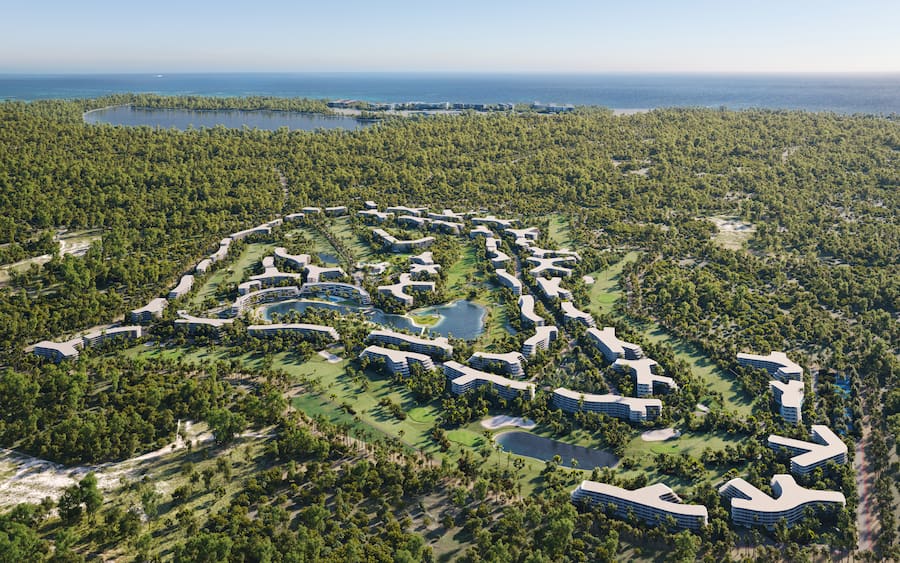
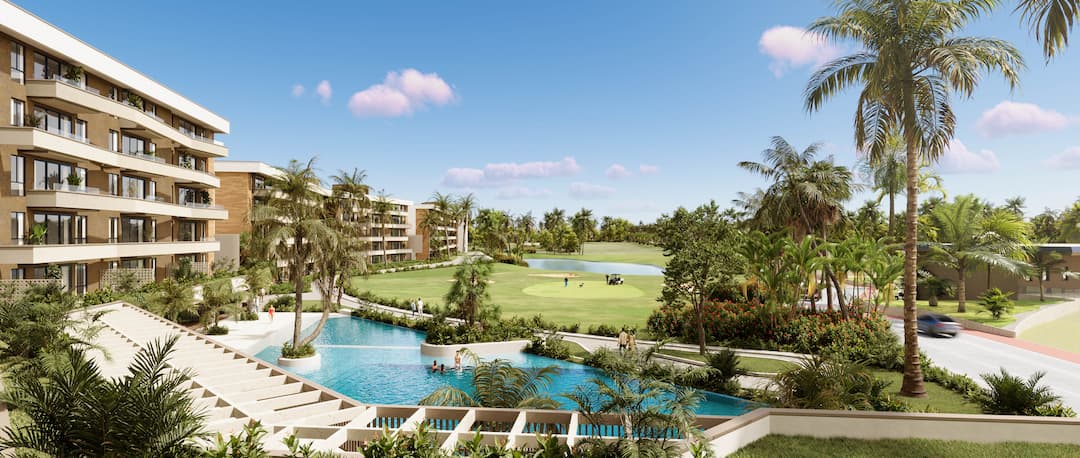
Many of the golf-course and resort communities that draw Canadian investors carry CONFOTUR certification, which is part of why the math on those projects can look so different from a resale condo down the street.
What You Keep Paying After You Close
That conversation usually stops there, but it shouldn’t. Three ongoing costs matter just as much to your actual return:
- IPI, the annual property tax: For fiscal year 2026, the DGII has set the individual exemption threshold at RD$10,695,494, up from RD$10,190,833 in 2025, which converts to roughly US$182,000 at recent exchange rates. That’s a peso figure re-indexed every year, so treat the dollar conversion as approximate, not fixed. You pay 1% annually only on the portion of your total Dominican Republic real estate holdings above that threshold, and the threshold applies across everything you own here, not per property. On a $300,000 property with no other Dominican real estate, that’s roughly 1% on about $118,000 of assessed value, or around $1,000 to $1,200 a year, unless the property carries a CONFOTUR exemption.
- HOA fees: Typical Punta Cana and Bavaro condo communities run $125 to $225 a month depending on unit size, and Cap Cana or beachfront developments often run 30% to 40% higher given the marina and resort-level amenities involved.
- Property insurance: Hurricane and property coverage generally runs about 0.8% of the purchase price annually, or roughly $2,400 a year on a $300,000 property. Given the country’s hurricane exposure, it’s not optional in any real sense even if it’s not legally mandated.
Add IPI, HOA, and insurance together and you’re commonly looking at another 1% to 2% of the property’s value every year, on top of any rental management fees (see How Can You Manage a Dominican Republic Property Remotely?) if you’re not living there full time.
The Canadian Side of the Ledger
There’s one more layer Canadian buyers need to plan for, easy to overlook when you’re focused on Dominican paperwork.
If you own foreign property, including a Dominican Republic property, with a combined cost base over CAD$100,000, you may need to file Form T1135 with the CRA each year. A property used mainly for your own personal enjoyment is generally exempt from this filing, but a property held mainly to generate rental income is not.
Any rental income itself is taxable in Canada regardless, reported on Form T776. The Dominican Republic withholds tax on non-resident rental income, and Canada and the Dominican Republic have had a tax treaty in force since 1976 specifically to prevent you from being taxed twice on the same income. In practice, that generally means you can claim a foreign tax credit in Canada for tax already paid here.
How that plays out for your situation depends on your income level and how the property is used and structured, so it’s genuinely a conversation for a cross-border tax advisor, not something to work out from a blog post.
This article is general information, not legal or tax advice. Before you close on a Dominican Republic property, work with a licensed Dominican attorney for the title and closing, and a cross-border tax advisor for how the purchase fits into your Canadian tax picture.
Frequently Asked Questions
Is CONFOTUR worth it for a Canadian buyer?
For most buyers, yes. It removes the 3% transfer tax and 15 years of annual IPI, real money on any property over roughly $150,000. The catch is verification: confirm the specific unit you’re buying is covered under the project’s actual CONFOTUR resolution before you factor the savings into your decision, not just the developer’s marketing claim.
Do I have to pay Canadian tax on top of what I pay in the Dominican Republic?
You’ll generally owe Canadian tax on rental income regardless of what you pay in the Dominican Republic, but the 1976 Canada-Dominican Republic tax treaty is designed to prevent true double taxation through a foreign tax credit. The specifics depend on your situation, so it’s worth reviewing with a cross-border tax advisor before you buy, not after.
What is the deslinde and why does it affect my closing costs?
The deslinde is a completed, registered survey that individualizes and confirms your property’s exact boundaries, as opposed to an undivided share of a larger parcel. A property without one is a red flag, and confirming it’s in place is part of the due diligence your attorney’s fee covers, exactly why that fee isn’t a cost to shop away.
Can I skip attorney fees and just use the developer’s lawyer?
You can, but it’s generally not a good idea. The developer’s attorney represents the developer’s interests, not yours, and title verification, contract review, and registration are exactly the protections an independent attorney provides. The 1% to 1.5% fee is usually the cheapest insurance you’ll buy in this entire transaction.
How much should I budget beyond the sticker price?
Plan for 5.5% to 7.5% in closing costs on a standard purchase, or 1% to 2% if the project is CONFOTUR-certified and verified. Then plan for another 1% to 2% of the property’s value annually for IPI, HOA, and insurance combined, before any rental management or personal-use travel costs.
Want Us to Run the Math on a Specific Property?
If you’re working through these numbers for a specific property, I’m happy to run the actual math with you, including whether a project’s CONFOTUR status holds up.
Reach out anytime at [email protected], or send your details through our contact form and we’ll get back to you.
About Ryan Coyle
Ryan Coyle is the founder of Connect, a real estate brokerage with more than 20 years in the industry and over $2 billion in transactions. A Dominican Republic investor himself, Ryan has built a meaningful personal position in the DR market, and through Connect’s international arm he helps Canadian buyers, investors, second-home owners, and snowbirds navigate ownership across the Dominican Republic, from Punta Cana and Cap Cana to the North Coast, with a focus on the numbers, the process, and long-term wealth building. Learn more at connect.ca.